
The 2026 FIFA World Cup
The 2026 FIFA World Cup is set to kick off, and it’s going to be a spectacle. With more teams, more countries, and some of the most iconic stadiums in the world, this tournament is set to redefine international football. Be ready for end-to-end matches, exciting surprises, and unforgettable moments. Let’s dive into the essential details surrounding this landmark event and explore what makes it truly historic.
When does the 2026 World Cup begin?
Football fans, prepare to be captivated. The 2026 World Cup is not too far away, and it will unfold from June 11 to July 19. With a record-breaking 48 nations participating, this World Cup promises a broader range of stories, more intense matchups, and a deeper pool of talent than ever. Every match will be a must-watch, a high-stakes battle that will keep you on the edge of your seat.
The path to the 2026 World Cup: Qualification and structure
The journey to the World Cup is already in full swing, with teams from every continent battling through rigorous qualification processes. FIFA’s six confederations—representing regions such as Asia (AFC), Europe (UEFA), and South America (CONMEBOL)—each follow unique formats that involve group stages and decisive knockout rounds. With the expansion to 48 teams, the number of matches has skyrocketed to a staggering 104. This means more opportunities for countries to compete at the highest level, more diversity, and more potential for surprises. The 2026 World Cup is shaping up to be a tournament like no other. The qualification process is a testament to the global reach of football and the passion that drives it.
A Continental Showcase: North America’s host cities
The 2026 FIFA World Cup is going to be a global spectacle set against the stunning backdrop of three diverse nations. Sixteen cities, each with its unique charm, will host the matches. From the vibrant energy of Mexico to the historic charm of the United States and the modern sophistication of Canada, the venues are as diverse as the cultures they represent. Let’s break down the key venues in each host country:
United States (US)
The United States will be the heart of the 2026 World Cup, hosting a significant portion of the matches. Iconic stadiums across the country will provide the backdrop for this global spectacle. The grand finale will be held at MetLife Stadium in New Jersey, a fitting stage for the tournament’s conclusion. In Los Angeles, fans will experience the cutting-edge SoFi Stadium. Miami Gardens’ Hard Rock Stadium, with its retractable roof and dynamic atmosphere, will surely be a highlight. Seattle’s Lumen Field, renowned for its passionate crowd, and AT&T Stadium in Dallas, with its enormous video board, are also must-see venues. Other notable stadiums include Mercedes-Benz Stadium in Atlanta, NRG Stadium in Houston, and Gillette Stadium in Foxborough. And let’s not forget Levi’s Stadium in Santa Clara and Kansas City’s GEHA Field, both known for their raucous support. These stadiums, each with its unique charm, will provide the perfect setting for the unforgettable matches that will define the 2026 World Cup.
Canada
Canada is also hosting some of the World Cup matches. Toronto’s upgraded stadium, a modern marvel, is primed to deliver a vibrant fan experience. Vancouver’s BC Place, with its sleek retractable roof, offers another top-tier venue for international football.
Mexico
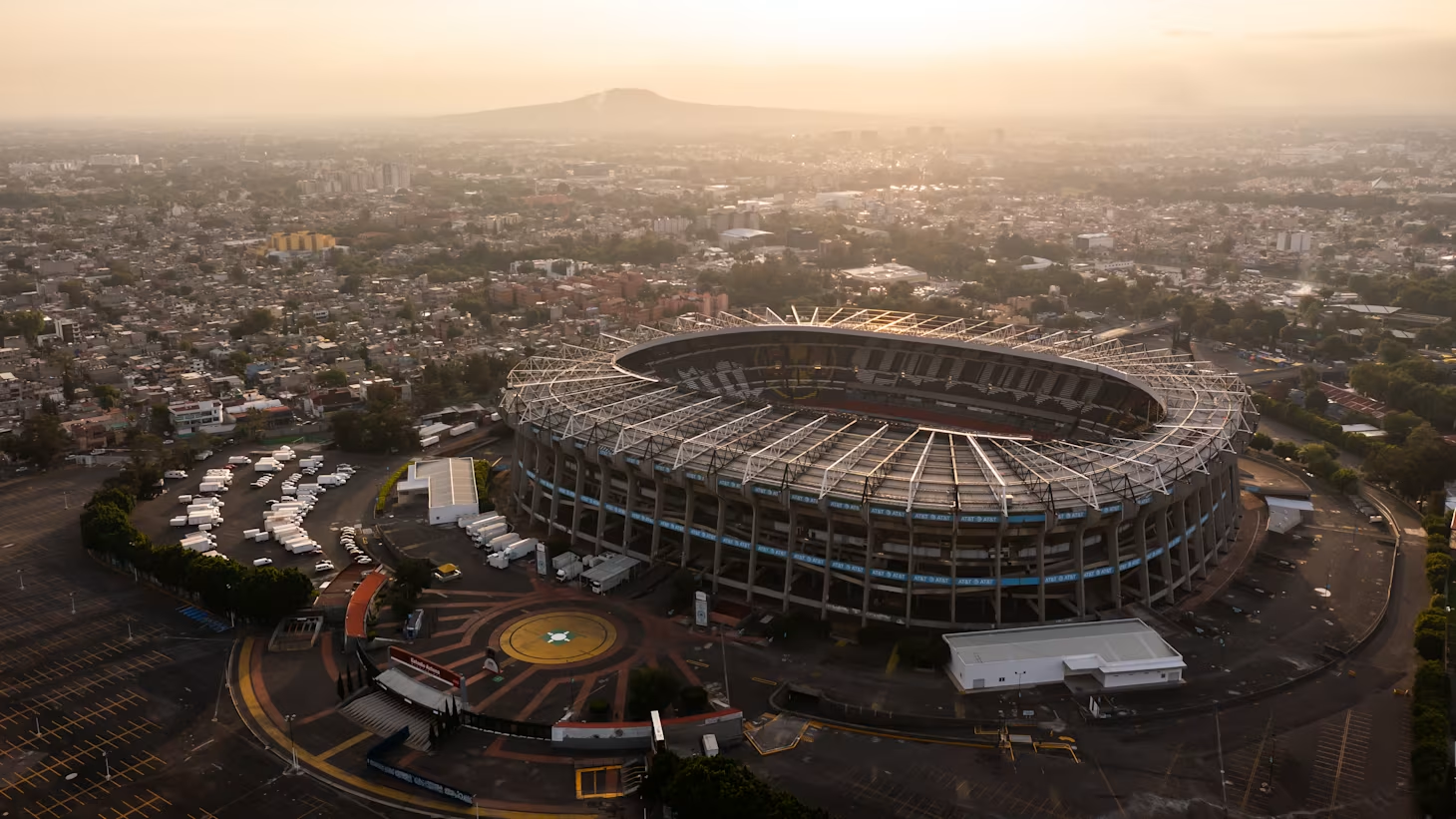
Mexico’s storied football legacy is represented by some of the sport’s most iconic stadiums. Estadio Azteca in Mexico City, a landmark in global football history, is poised to play a central role again. Guadalajara’s Estadio, renowned for its passionate atmosphere, and Monterrey’s Estadio BBVA, a marvel of modern design, round out Mexico’s impressive lineup. These Mexican stadiums, combined with the venues in the United States and Canada, will create a truly unforgettable experience for fans from around the world.
A revamped tournament structure
The 2026 World Cup adopts a revamped tournament format tailored for the increased number of teams. The tournament begins with 12 groups of four, where the top two teams from each group, along with select high-ranking third-place teams, will advance to the knockout stage. This format guarantees that every match is crucial and every point precious. The knockout phase, with 32 teams battling it out, will be a high-stakes drama. The stakes will rise with each match, the pressure intensifying as teams fight for survival.
This refreshed setup is crafted to keep the excitement high throughout the event. It’s a new era of football, a time when every match can be a game-changer when surprises are expected and the unexpected can happen.
A tournament to anticipate: Schedule highlights and key moments
While the full match schedule and specific team pairings are yet to be revealed, the group stage is expected to span 17 days, offering a packed calendar with daily games. As teams progress into the knockout rounds, the intensity and stakes will rise, leading to an epic showdown in July. With up to six games on certain days, this World Cup promises non-stop action and excitement. It’s a tournament that football fans won’t want to miss.
The 2026 World Cup is shaping up to be a historic event. With its expanded format, iconic venues, and top-tier competition, it’s set to redefine football on a global scale. Get ready for some epic matches, unexpected upsets, and unforgettable moments. It’s going to be a football feast that you won’t want to miss!




Через
секунд вы будете перенаправлены на сайт AltinCasino, надежного букмекера. Если этого не произошло, нажмите на кнопку ниже.